
Server response time has become one of the most important performance metrics for modern websites. In 2026, users expect websites to load instantly, and even small delays can significantly impact user experience, SEO rankings, and business revenue.
As websites become more complex and competition increases, optimizing server response time is no longer optional — it is essential.
What is Server Response Time?
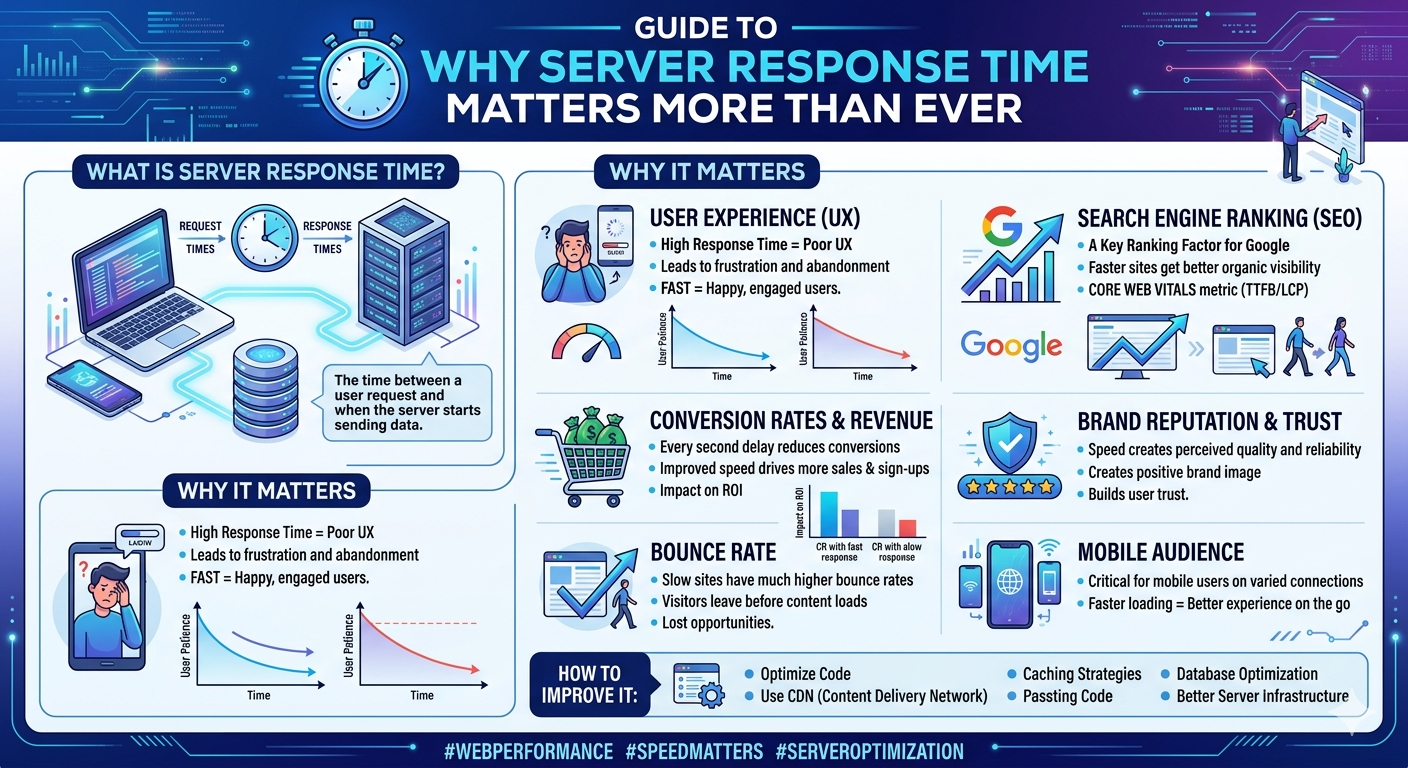
Server response time refers to the amount of time it takes for a web server to respond to a request from a browser.
In simple terms, it measures how quickly a server starts delivering data after a user clicks on a link or enters a website.
A fast response time means:
- Quick initial loading
- Faster interaction with the website
- Better user experience
- Improved overall performance
A slow response time means delays before anything appears on the screen, which can frustrate users.
Why Server Response Time Matters More in 2026
In 2026, digital expectations are much higher than before. Users no longer tolerate slow websites, especially when alternatives are just one click away.
Several factors make server response time more important than ever:
1. Increased User Expectations
Modern users expect websites to load in under a few seconds. If a site feels slow, users are likely to leave immediately.
2. Mobile-First Internet Usage
Most users now browse using mobile devices. Mobile networks can already introduce latency, so server speed becomes even more critical.
3. Competitive Online Market
Businesses are competing for attention in almost every industry. A faster website can give a significant advantage over competitors.
4. Search Engine Ranking Factors
Search engines like Google prioritize fast-loading websites in search results, making server performance an important SEO factor.
Impact on User Experience
Server response time plays a direct role in how users interact with a website.
If the server is slow, users may experience:
- Delayed page loading
- Lag before content appears
- Poor navigation experience
- Frustration and abandonment
On the other hand, a fast server creates a smooth and seamless browsing experience.
Even a delay of a few hundred milliseconds can affect how users perceive a website’s quality.
SEO and Ranking Benefits
Search engines measure website performance using multiple signals, including server response time.
Better response time helps improve:
- Core Web Vitals scores
- Page loading speed metrics
- Crawl efficiency
- Indexing speed
Websites that load faster are more likely to rank higher in search results, especially in competitive niches.
Impact on High-Traffic Websites
Server response time becomes even more critical when websites experience high traffic.
If a server is not optimized, high traffic can lead to:
- Slow loading pages
- Timeouts and errors
- Server overload
- Temporary downtime
This is why scalable hosting solutions like VPS and cloud hosting are widely used in 2026.
Factors That Affect Server Response Time
Several technical elements influence how fast a server responds:
1. Hosting Quality
Low-quality hosting often leads to slower response times due to limited resources.
2. Server Hardware
Faster CPUs, NVMe SSD storage, and optimized infrastructure improve response speed.
3. Database Optimization
Poorly optimized databases can significantly slow down server processing.
4. Website Code Efficiency
Heavy scripts, plugins, and unoptimized code increase processing time.
5. Traffic Load
Higher traffic without proper scaling can overload servers.
How to Improve Server Response Time
Improving server response time requires both server-side and website-side optimization.
Some effective methods include:
- Using high-performance hosting (VPS or dedicated servers)
- Enabling caching systems
- Optimizing database queries
- Using a CDN to reduce load
- Compressing images and files
- Removing unnecessary plugins
- Upgrading server resources when needed
Even small improvements can have a noticeable impact on performance.
Future of Server Performance in 2026
As technology continues to evolve, server optimization is becoming more advanced.
Modern hosting now focuses on:
- Faster NVMe storage systems
- Edge computing
- Automated scaling
- AI-based traffic management
- Global content distribution
These technologies help reduce response time and improve website reliability.
Final Thoughts
Server response time is no longer just a technical detail — it is a core factor that affects SEO, user experience, and business success.
In 2026, websites that prioritize fast server response times will have a clear advantage in performance, visibility, and customer satisfaction.
Investing in better hosting infrastructure and optimization strategies is one of the most effective ways to ensure long-term online success.