
Introduction
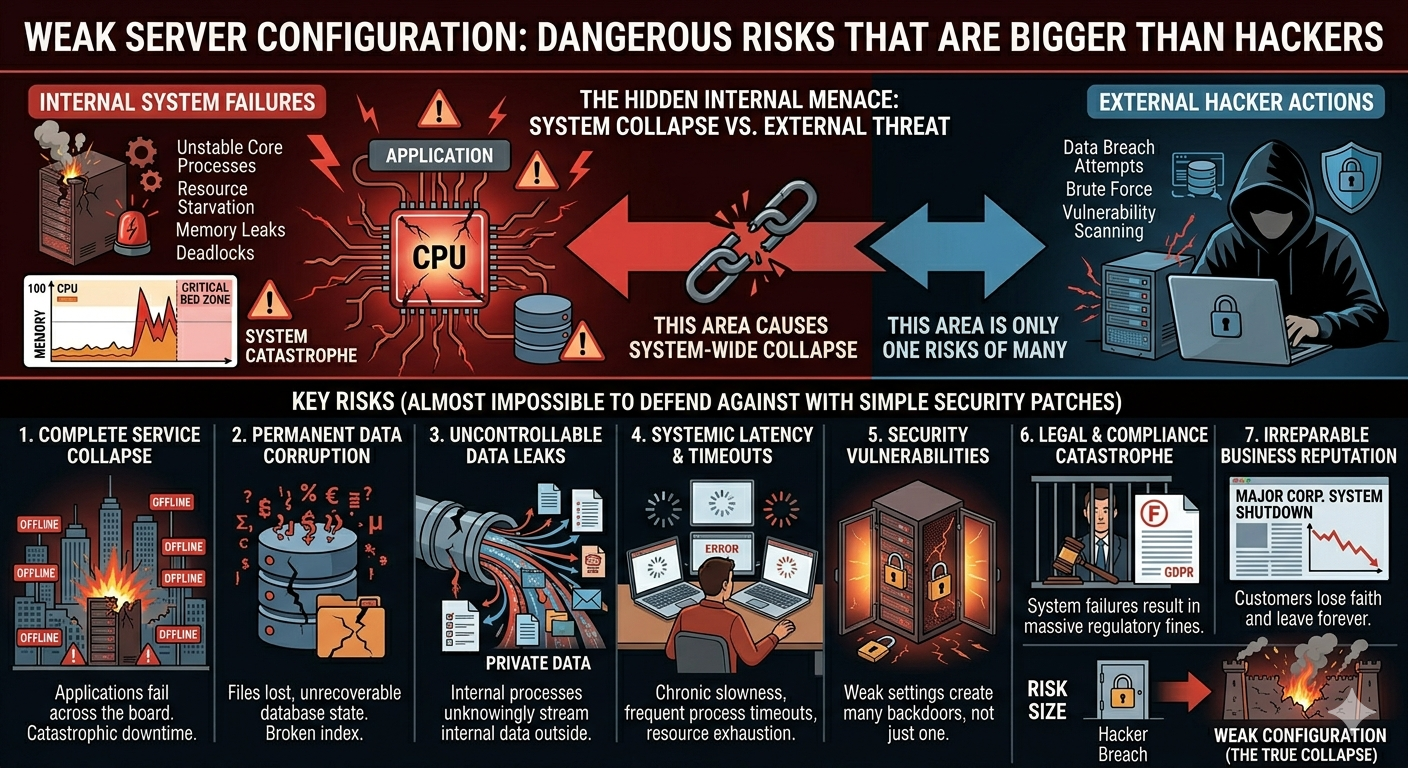
When people talk about server security, they usually think about hackers and cyberattacks. But in reality, one of the biggest risks to any website or system is actually something simpler: weak server configuration.
Poorly configured servers can expose your website to downtime, data loss, performance issues, and even security breaches—sometimes even more dangerous than direct hacking attempts.
In this article, we’ll explore why weak server configuration is a serious risk and break down the key issues behind it in a simple way.
1. Exposed Security Settings
Weak server configuration often means default or misconfigured security settings.
This can include:
- open ports that should be closed
- weak firewall rules
- unnecessary services running
These exposed settings make it easier for attackers—or even automated bots—to find vulnerabilities.
2. Unrestricted File Access
If file permissions are not configured properly, sensitive files may become accessible.
This can lead to:
- exposure of configuration files
- access to database credentials
- unauthorized file modifications
Even without hackers, simple misconfiguration can cause serious damage.
3. Weak Authentication Controls
Servers with poor configuration may use weak login settings such as:
- default usernames and passwords
- no multi-factor authentication
- unlimited login attempts
This makes it easier for attackers to gain access through brute-force methods.
4. Poor Resource Management
Weak server configuration can also affect performance.
When resources are not properly managed:
- CPU and memory can be overloaded
- applications may crash
- websites become slow or unresponsive
This often leads to downtime, especially during traffic spikes.
5. Insecure Database Connections
Databases are the heart of most websites, and weak configuration can leave them exposed.
Common issues include:
- unencrypted database connections
- open database ports
- weak database user permissions
This increases the risk of data leaks or corruption.
6. Lack of Logging and Monitoring
Without proper configuration, servers may not track important activities.
This means:
- no record of suspicious activity
- delayed detection of issues
- harder troubleshooting during downtime
Without logs, identifying problems becomes much more difficult.
7. Increased Risk of Downtime
One of the biggest impacts of weak server configuration is frequent downtime.
This can happen due to:
- misconfigured services
- overloaded server resources
- failed processes or scripts
Unlike hacking attacks, these issues often come from internal mistakes—but can be just as damaging.
8. Misconfigured SSL and HTTPS Issues
Another common problem in weak server configuration is incorrect SSL setup.
When SSL is not properly configured, it can lead to:
- insecure “HTTP” connections instead of “HTTPS”
- browser security warnings
- failed secure transactions
This not only affects user trust but can also negatively impact SEO rankings, since search engines prefer secure websites.
9. Improper Backup Configuration
Weak server configuration often includes missing or poorly set up backup systems.
This means:
- no automatic backups
- backups stored on the same server (risky)
- outdated backup schedules
If something goes wrong (like data corruption or failure), recovery becomes very difficult or even impossible.
10. Misconfigured Updates and Patches
Servers need regular updates, but weak configuration can cause update issues.
Problems include:
- automatic updates not enabled
- outdated software versions running
- compatibility issues after updates
This leaves the server vulnerable to known security risks and performance bugs.
Why Weak Configuration Can Be Worse Than Hackers
While hackers are external threats, weak server configuration is an internal vulnerability.
This means:
- you are already “open” to problems
- attacks become easier to execute
- system failures happen more frequently
In many cases, attackers don’t even need advanced skills—they just exploit poor configuration.
How to Prevent Weak Server Configuration
To reduce risks, you should:
- regularly audit server settings
- disable unnecessary services
- enforce strong authentication
- apply proper file permissions
- use monitoring tools
Good configuration is the foundation of server security.
Conclusion
Weak server configuration is often overlooked, but it can be more dangerous than hackers themselves. It creates vulnerabilities, reduces performance, and increases the risk of downtime and data loss.
By understanding and fixing these issues, you can significantly improve your server’s stability and security.