
A dedicated VPS (Virtual Private Server) is a virtual server that is allocated specifically for one user or business. Unlike shared hosting, where multiple users share the same resources, a dedicated VPS gives you guaranteed CPU, RAM, and storage resources.
This makes it a powerful solution for users who need stable performance, especially in environments where speed and uptime are critical.
In 2026, dedicated VPS has become widely used not only for websites, but also for trading, applications, and remote systems that require constant uptime.
How Dedicated VPS Works
A dedicated VPS is created using virtualization technology. A powerful physical server is divided into multiple isolated virtual servers.
However, the key difference is:
- Your allocated resources are reserved for you only
- Performance is not affected by other users
- You get consistent speed and stability
This makes it feel similar to having your own private server, but at a lower cost compared to a full physical server.
Dedicated VPS vs Shared VPS
To understand its importance, here is a simple comparison:
Shared VPS:
- Resources shared with multiple users
- Performance can fluctuate
- Lower cost
- Less control
Dedicated VPS:
- Fully reserved resources
- Stable and predictable performance
- Higher reliability
- Better security and isolation
This is why dedicated VPS is preferred for professional use cases.
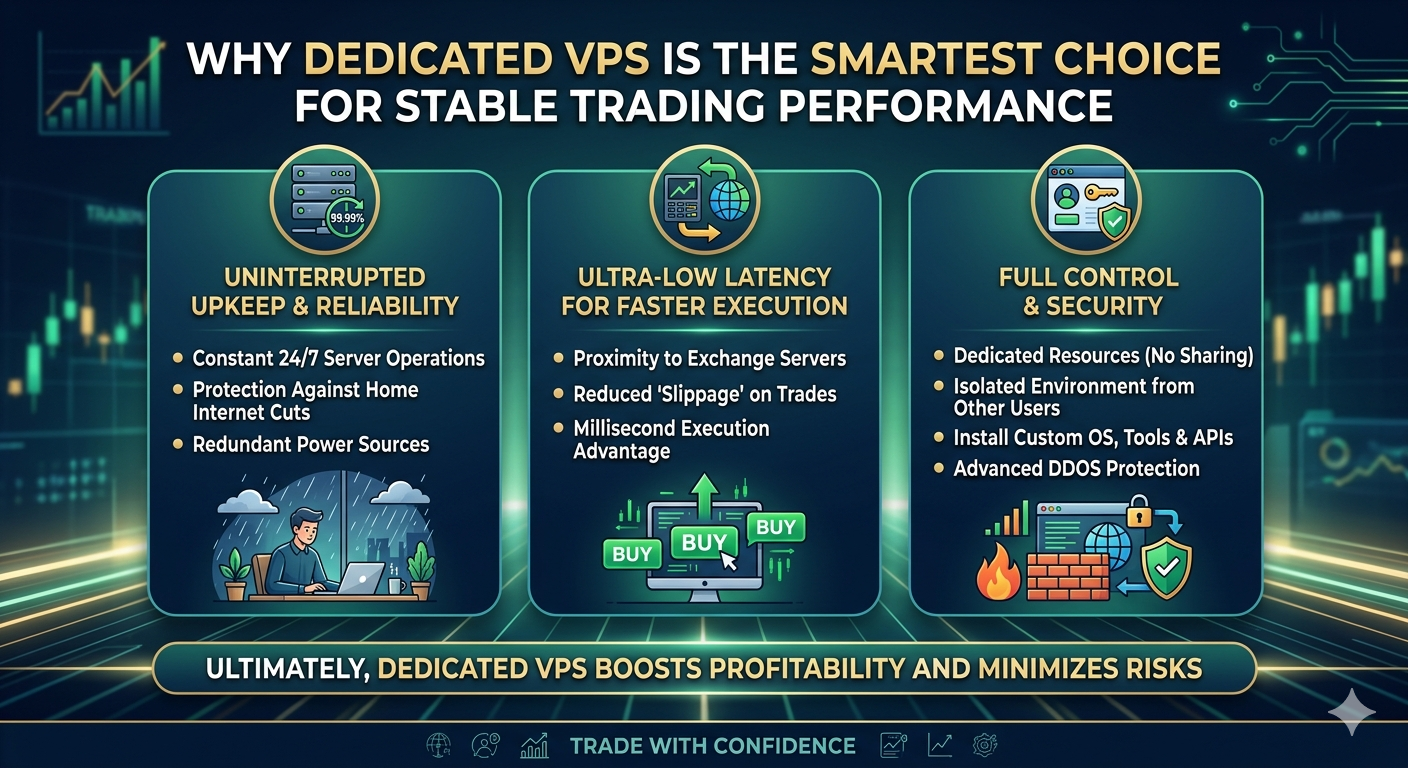
Why Dedicated VPS Is Important for Trading
One of the biggest use cases for dedicated VPS today is online trading (forex, crypto, indices).
Trading requires:
- Fast execution
- Stable internet connection
- Low latency
- No downtime
A dedicated VPS provides all of these advantages.
With a VPS hosted in a professional data center, traders can avoid:
- Internet disconnection issues
- PC crashes during trades
- Slow order execution
- Missed trading opportunities
This is especially important during high volatility periods when every second matters.
1. Stability and 24/7 Uptime
Dedicated VPS is designed for continuous operation.
Unlike a home PC:
- No power interruptions
- No WiFi instability
- No system overload
Most VPS providers offer 99.9% uptime, which is essential for applications that must run non-stop.
2. Low Latency Performance
Latency refers to the delay between sending and executing a command.
In trading and real-time applications, low latency is critical.
Dedicated VPS helps reduce latency by:
- Using high-speed network infrastructure
- Hosting servers closer to financial exchanges
- Optimizing routing paths
This results in faster execution and better performance.
3. Better Security and Isolation
Security is another major advantage.
Since resources are isolated:
- No risk from other users
- Reduced exposure to attacks
- Better system stability
This makes dedicated VPS ideal for sensitive operations like trading accounts, business systems, and automated tools.
4. Remote Access From Anywhere
A dedicated VPS can be accessed from anywhere in the world.
You only need:
- Internet connection
- Login credentials
- Remote desktop or browser access
This allows users to manage their systems anytime, even while traveling.
5. Ideal for Multiple Use Cases
Dedicated VPS is not limited to trading. It is also used for:
- Web hosting (high traffic websites)
- Game servers
- Business applications
- Automation tools
- Development environments
Its flexibility makes it suitable for both personal and professional needs.
Why Dedicated VPS Is Growing in 2026
In 2026, more users are moving to VPS solutions because:
- Online systems require constant uptime
- Speed has become more important than ever
- Remote work and cloud systems are standard
- Automation and AI tools need stable servers
Dedicated VPS fits perfectly into this modern digital environment.
Conclusion
A dedicated VPS is one of the most reliable and powerful hosting solutions available today.
It provides:
- Stable performance
- High security
- Low latency
- 24/7 uptime
- Flexible remote access
Whether you are a trader, developer, or business owner, dedicated VPS offers a strong foundation for performance-critical tasks.
In 2026, it is no longer just an option — it is becoming a standard requirement for serious users who want stability and speed.