
In 2026, web hosting is no longer limited to traditional centralized servers or even standard cloud infrastructure. A major shift is happening in the background of the internet — the rise of edge computing. This technology is quietly reshaping how websites, applications, and services are delivered to users across the world.
Instead of relying on a single data center located far from the user, edge computing brings processing power closer to where the user actually is. This reduces latency, improves speed, and creates a more responsive online
experience.
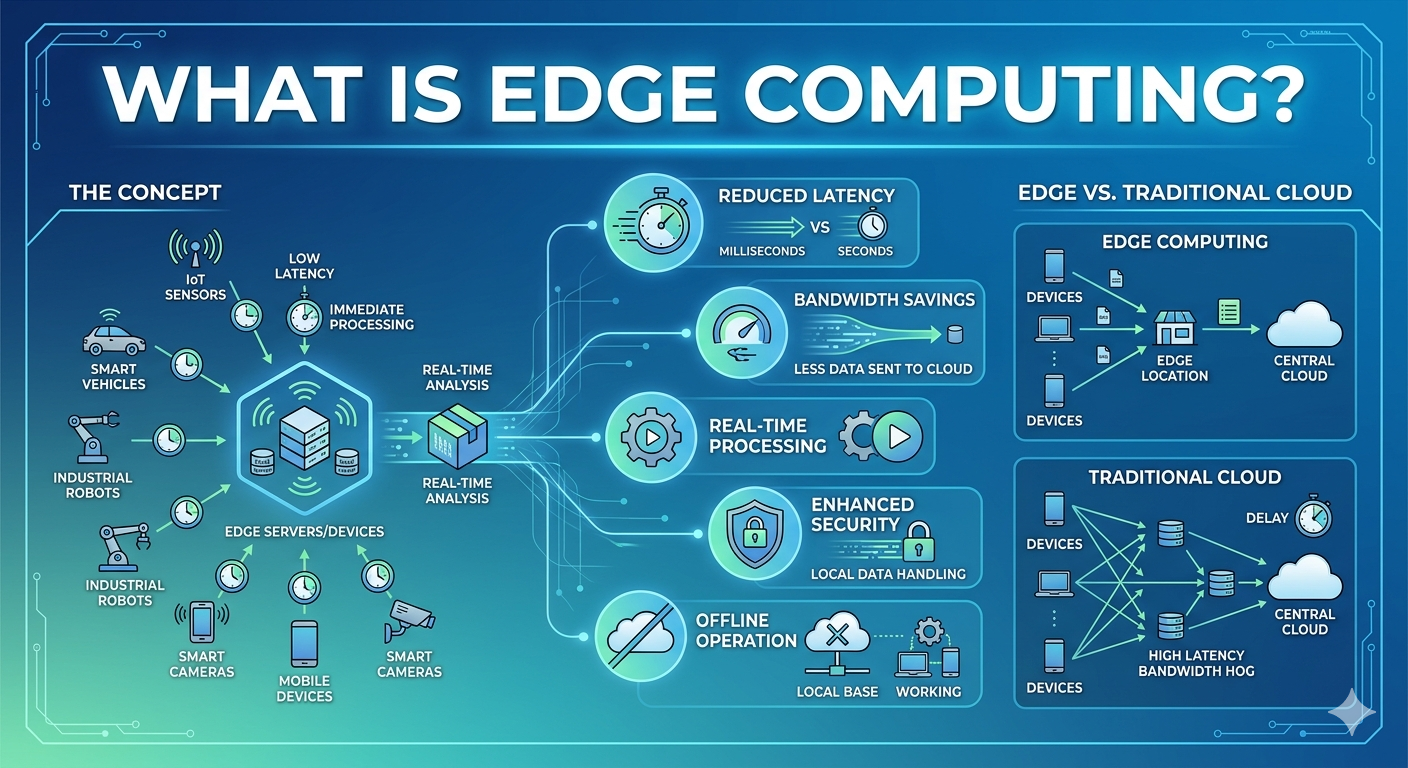
Edge computing is a system where data processing happens closer to the “edge” of the network — meaning near the user’s physical location.
For example:
- Instead of sending a request to a server in another country
- The request is handled by a nearby edge node or local server
This reduces the distance data has to travel, which directly improves performance.
In simple terms, it removes unnecessary “travel time” between the user and the server.
Why Edge Computing Matters in 2026
Modern applications are more demanding than ever. In 2026, users expect:
- Instant website loading
- Real-time app responses
- Lag-free gaming and streaming
- Fast API responses
Traditional centralized hosting often struggles with these expectations, especially when users are globally distributed.
Edge computing solves this by:
- Reducing latency
- Improving load times
- Distributing traffic efficiently
- Reducing server overload
With more IoT devices, AI-driven apps, and real-time systems being used daily, the demand for instant processing has become critical.
Impact on Web Hosting Industry
The hosting industry has evolved significantly because of edge computing. Many providers now combine:
- VPS hosting
- Cloud infrastructure
- Edge networks
This hybrid model allows websites to remain stable while still delivering content quickly worldwide.
Even major cloud providers now integrate edge nodes into their systems to compete with specialized edge networks. Instead of replacing traditional hosting, edge computing is being added as a performance layer on top of existing systems.
Edge vs Traditional Hosting
Traditional hosting works like this:
- User sends request
- Request goes to main server
- Server responds back
Edge hosting works like this:
- User sends request
- Request goes to nearest edge node
- Response is delivered instantly from nearby location
This difference may seem small, but it has a huge impact on performance at scale. The closer the server is to the user, the faster everything feels — even if the backend system is the same.
Benefits for Businesses
Edge computing provides several advantages:
- Faster website loading speed
- Better user experience globally
- Improved SEO performance
- Reduced bandwidth strain on central servers
- Higher reliability during traffic spikes
- Lower risk of downtime in specific regions
For e-commerce platforms, even a 1-second improvement in load time can increase conversions significantly. For gaming and streaming services, reduced latency can completely change user satisfaction.
Real-World Use Cases
Edge computing is already being used in many industries:
- Online gaming servers for reduced ping
- Video streaming platforms for smoother playback
- E-commerce websites for faster checkout
- AI applications for real-time processing
- IoT systems for instant device communication
These use cases show that edge computing is not just theory — it is already part of daily internet infrastructure.
Challenges of Edge Computing
Despite its advantages, edge computing also has limitations:
- Higher infrastructure complexity
- More expensive setup for full deployment
- Requires advanced network management
- Not all applications need edge-level speed
Because of this, many companies still combine edge with VPS or cloud instead of fully replacing them. Managing multiple edge nodes across regions also requires strong technical expertise.
The Future: Hybrid Hosting Models
In 2026, the most common approach is not choosing one technology, but combining them:
- VPS for core application logic
- Cloud for scalability
- Edge computing for fast content delivery
This hybrid model ensures performance, flexibility, and cost efficiency at the same time. It also allows businesses to scale gradually without rebuilding their entire infrastructure.
Conclusion
Edge computing is not replacing traditional hosting — it is enhancing it. As user expectations continue to grow in 2026, the demand for faster, more responsive systems will only increase.
Businesses that adopt edge technology early will have a clear advantage in performance, SEO rankings, and user satisfaction. In the future, the internet will not be defined by where servers are located, but how close the experience feels to the user.